
So You Forgot to Plan… Now What?
There’s a very specific kind of panic that hits when you realize people are coming over in a few hours and your “plan” is basically snacks and hope. You scroll your phone, consider board games, briefly think about charades, and then remember how awkward that got last time when nobody committed. The energy drops fast when there’s no structure, no momentum, and no reason for people to actually engage with each other.
That’s where a murder mystery game quietly solves everything.
Not in a dramatic, theatrical way where everyone needs acting skills or costumes or a Broadway-level commitment. In a practical way. It gives people a reason to talk. It hands them a role. It creates tension, curiosity, and just enough chaos to keep things interesting without turning the night into work.
And yes, it can absolutely be done last-minute.
Why Murder Mystery Games Work When Everything Else Feels Forced
Most last-minute party ideas fail for one simple reason. They rely on people to generate their own fun. That sounds great in theory. In reality, it turns into small talk loops, phone checking, and that one person trying way too hard to carry the room.
A good mystery flips that dynamic completely.
Instead of asking guests to entertain themselves, it gives them a structure that naturally creates interaction. Suddenly people are asking questions, sharing secrets, forming alliances, and accusing each other of suspicious behavior. Even the quiet guests have a role to play, which changes everything.
There’s also a psychological shift that happens. When someone is “just themselves,” they might hold back. When they’re playing a character, they lean in. They say things they normally wouldn’t. They engage faster because it’s not personal, it’s part of the game.
That’s the real magic.
The Biggest Myth About Last-Minute Party Planning
People assume that anything done last-minute will feel rushed or cheap. That’s true for decorations you grabbed at the grocery store five minutes before guests arrived. It’s not true for a well-designed experience.
A printable mystery game is one of the few party options that actually thrives under time pressure. You don’t need shipping. You don’t need to coordinate complicated setups. You don’t need to explain a bunch of rules while people stare at you holding a plate of chips.
You download it. You print it. You hand out envelopes. Done.
Even the setup feels intentional because everything is structured from the start.
Start Smaller if You’re Unsure
If you’re thinking, “This sounds fun, but I don’t want to risk the whole night on something new,” that’s fair. You don’t need to.
You can test the format with a quick, low-pressure version before committing to a full party experience.
Give your group a short, light mystery that takes about 15 minutes and works with just a few people. It’s fast, easy, and surprisingly effective at getting people into the mindset.
Try something simple and low-stakes first. A quick mystery with no heavy themes, just enough intrigue to get people talking and laughing. It’s a great way to see how your group reacts without needing a full cast.
Click HereWhat Actually Makes a Last-Minute Mystery Party Feel Intentional
There’s a difference between throwing something together and making it feel like a plan. You don’t need perfection. You need a few small details that signal effort.
Lighting helps more than you think. Turn off overhead lights and use lamps or warm bulbs. It instantly changes the mood.
Music matters too. Not loud, not distracting, just something in the background that fits the theme. A simple playlist can carry the atmosphere without anyone noticing why it feels different.
Then there’s food. Keep it easy. You’re not running a restaurant. Finger foods, snacks, maybe one standout item that matches the theme if you’re feeling ambitious.
The game does most of the heavy lifting. You’re just creating a container for it.
Pick a Theme That Matches Your Group, Not Your Imagination
This is where people overcomplicate things.
You don’t need the most creative theme. You need one that your group will immediately understand and feel comfortable jumping into.
If your friends like drama and storytelling, a glamorous setting works well. Something like Grand Gilded Express puts everyone on a 1930s train with secrets, tension, and a built-in sense of elegance. It feels like stepping into a movie without needing costumes to make it work.
If your group leans more toward playful chaos, a Western theme like Murder at Copper Gulch gives you big personalities, bold accusations, and just enough humor to keep things light.
For smaller groups or something with a different flavor, The Louvre Heist adds a clever twist. It’s not just about solving a mystery, it’s about figuring out who double-crossed the group after a perfectly executed plan.
And if you’re working with kids or want something family-friendly, Mystery at the Desert Palace keeps things clean, adventurous, and easy to follow without losing the fun.
The point is not to impress people with originality. It’s to choose something that makes it easy for them to jump in without hesitation.
How to Run the Game Without Feeling Like a Host Robot
One of the quiet fears people have is that they’ll spend the whole night managing the game instead of enjoying it.
That only happens when the structure is unclear.
A well-built mystery game guides itself. You’re not constantly explaining rules or fixing confusion. You’re just nudging things along when needed.
At the start, you hand out character sheets and let people read their roles. Then you introduce the situation. After that, the room takes over.
People start talking. They ask questions. They follow their objectives. They get suspicious.
Your job is mostly to watch it unfold and enjoy the moments where someone suddenly realizes they’ve been lied to for the past twenty minutes.
If anything, you’ll find yourself laughing more than hosting.
The Social Shift That Makes These Parties Memorable
There’s a moment in every good mystery party where the energy flips.
At first, people are a little unsure. They’re reading their cards, figuring things out, testing the waters.
Then someone makes an accusation. Someone else denies it. A third person jumps in with “Wait, that doesn’t make sense because…” and suddenly everyone is involved.
The room gets louder. People move around more. Conversations overlap. You start hearing phrases like “No, you said earlier…” and “That’s not what I heard.”
That’s when you know it’s working.
It’s not forced. It’s not awkward. It’s alive.
What to Avoid if You’re Planning Last-Minute
There are a few traps that will quietly ruin the experience if you’re not careful.
Don’t over-explain the game. Give people just enough to get started and let them discover the rest.
Don’t over-decorate. A few thoughtful touches beat a rushed attempt at going all out.
Don’t force costumes. Encourage them if you want, but don’t make it a requirement. People engage more when they feel comfortable.
And don’t pick something too complicated. Last-minute works best when the structure is clear and the flow is smooth.
Why Printable Mystery Games Are the Best Last-Minute Option
You could try to piece together your own game. Some people do. It sounds fun until you realize how many moving parts are involved.
Characters need motivations. Clues need to connect. The pacing needs to work. The reveal needs to make sense.
Miss any of those and the whole thing feels flat.
A well-designed printable game already solves those problems. The story is built. The interactions are intentional. The clues actually lead somewhere.
You’re not guessing your way through the night. You’re stepping into something that’s already been tested.
Turning a “We’ll Figure It Out” Night Into Something People Remember
Here’s what usually happens with last-minute plans.
People show up. You chat. You eat. You maybe play a game. The night ends. It was fine.
Now compare that to a night where people are still talking about who they suspected, what they got wrong, and how they completely missed that one clue.
That’s the difference.
A mystery game doesn’t just fill time. It creates moments. It gives people something to talk about during the party and after it’s over.
And it does it without requiring weeks of planning.
One More Thing Before You Host
If you’re even slightly curious about how your group would respond, don’t overthink it.
Start small. Try a quick version. See how people react when they’re given a role and a reason to engage.
You’ll know pretty quickly whether it clicks.
And if it does, you’ve just unlocked one of the easiest ways to turn an ordinary night into something that actually feels like an event.
Click Here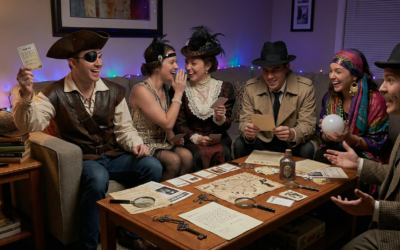


0 Comments