
Murder mystery games have a reputation problem.
A lot of people picture a crowded living room, twenty name tags, one overly committed actor, and at least three people wondering why they agreed to this. That picture scares couples. It scares double dates. It scares small groups who just want something fun to do without recruiting half their church directory.
Here is the reality. Mystery games can be incredible for couples and small groups when the format is flexible and the expectations are sane. We have run them for marriage ministries, small gatherings, and groups where everyone showed up with their spouse and a healthy amount of skepticism. They worked. Not because everyone suddenly became an actor, but because the game met the group where they were.
If you are trying to plan something different for a double date night, a couples retreat, or a small group that wants more than dinner and awkward conversation, mystery games can be a surprisingly good fit.
Why Couples Actually Like Mystery Games
Couples like shared experiences with low pressure.
Mystery games give couples something to do together instead of something to perform for others. They read clues. They whisper theories. They notice details. They laugh when they are wrong.
The shared goal matters. Solving something together builds connection without forcing emotional vulnerability on a schedule. Nobody has to bare their soul. They just have to figure out who is lying about the compass or the missing document.
This is why mystery games worked so well in marriage ministry settings. Everyone arrived as a pair. Nobody felt singled out. The game created conversation without putting anyone on the spot.
Small Groups Thrive on Structure
Small groups often fail at game nights for one simple reason. Too much downtime.
When only six to ten people are present, silence feels louder. Confusion lingers. Momentum stalls if nobody knows what to do next.
Well-structured mystery games solve this. Clear objectives keep the room moving. Each person has a reason to talk. Each couple has information worth sharing.
Adventure-based stories shine here. In an expedition-style mystery like The Emerald Expedition, every role matters. Even with fewer players, the story still works because the objectives scale naturally.
The Myth of the “Perfect Group Size”
Many people assume mystery games only work at full capacity. They imagine you need ten or twelve couples to justify the effort.
That belief stops a lot of good nights from ever happening.
Flexible mysteries can run beautifully with fewer players. Five couples is often ideal. Enough variety for intrigue. Small enough for meaningful interaction.
Some games are even better at smaller sizes because:
- Conversations feel more personal
- Clues move faster
- Shy players participate more easily
The key is choosing a mystery designed to adapt. Games that rely on rigid headcounts or constant mingling struggle in small groups. Games built around objectives and rounds do not.
Want to Test a Mystery Without Committing to a Full Night?
If you are curious but hesitant, starting with a short mystery is the easiest way to see if this format fits your group. It works with just a few players, keeps things light, and gives everyone a feel for how mysteries actually run without turning the evening into a production.
Click Here
Double Dates and Low-Stakes Fun
Double dates are tricky. You want something interactive, but not competitive in a weird way. You want conversation, but not forced icebreakers. You want fun without needing a whiteboard and a facilitator.
Mystery games hit that balance.
Two couples can pair up, share theories, and gently debate suspects. The focus stays on the story, not on performing or impressing the other couple.
Shorter mysteries or scaled-down versions of larger stories work especially well here. Nobody feels overwhelmed. The energy stays playful.
And unlike trivia, mystery games do not reward obscure knowledge. They reward attention and logic. That keeps things fair.
Why Marriage Ministries Love Mysteries
We have seen this firsthand.
When couples show up to a marriage event, expectations vary wildly. Some want depth. Some want fun. Some just want to avoid awkward group activities.
Mystery games quietly meet all of those needs.
Couples collaborate without being told to. Communication happens naturally. Humor emerges without anyone forcing it. Nobody is graded on participation.
The structure provides safety. The story provides interest. The result is connection that feels organic.
This is also where flexible player counts matter most. It is rarely realistic to gather ten couples on the same night. Being able to run a game with five or six couples turns an idea into something achievable.
The Louvre Heist and Smaller Groups
Some mysteries are especially friendly to small numbers. Heist-style stories tend to work well because the focus is on secrets, roles, and information rather than crowd dynamics.
A mystery that runs with a minimum of six players opens the door to:
- Three couples
- Two couples and a few friends
- One couple hosting a small group
That flexibility matters. It removes the pressure of filling seats and lets hosts plan confidently.
What Makes a Mystery Work for Couples
Not every mystery is a good fit for couples or small groups. The best ones share a few traits:
- Clear roles with specific objectives
- Minimal reliance on acting or accents
- Familiar settings
- Guided rounds
Couples want to engage together, not feel lost in chaos. Games that respect that dynamic get replayed. Games that do not get quietly retired.
Food, Atmosphere, and Comfort
Couples and small groups notice atmosphere more than large parties do.
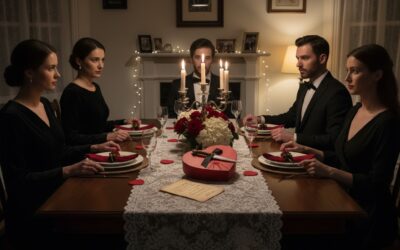
A few simple touches go a long way. Candles. Printed clue cards. Music playing quietly in the background. Snacks that do not require utensils.
You do not need elaborate props. You need comfort.
Mystery games already provide the story. Your job is to make the space inviting enough that people relax into it.
How Long Is Too Long?
For couples and small groups, shorter is often better.
Ninety minutes tends to be a sweet spot. Long enough to feel immersive. Short enough to avoid fatigue.
This is another reason flexible mysteries shine. You can trim side conversations. Move rounds along naturally. End on a high note.
Nobody wants a mystery night that turns into a three-hour endurance test.
The Hidden Benefit for Couples
Here is something people do not expect.
Mystery games give couples a shared memory. An inside joke. A moment they can reference later.
“You still thought it was the guide.”
“You believed that note immediately.”
Those moments matter. They outlast the game.
Choosing Your First Mystery for a Small Group
If you are buying your first mystery for couples or a small group, look for:
- Minimum player counts you can actually meet
- Clear instructions for scaling
- Themes everyone understands quickly
- A tone that feels welcoming
Avoid games that demand a packed house or constant performance. Choose stories that value participation over theatrics.
So, Do Mystery Games Work for Couples?
Yes. When chosen thoughtfully, they are one of the most engaging things couples can do together in a group setting.
They spark conversation. Encourage teamwork. Create laughter without pressure.
And they scale. That is the part most people miss.
Want to Try One Without Overcommitting?
If you want to see how a mystery feels with just a few people, start small. A short mystery lets couples experience the format, discover what they enjoy, and decide if they want to go bigger next time.
Click Here


0 Comments