
The Accountant Who Became a Heist Mastermind in Under an Hour
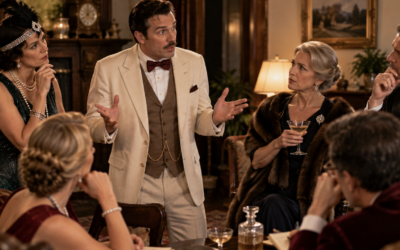
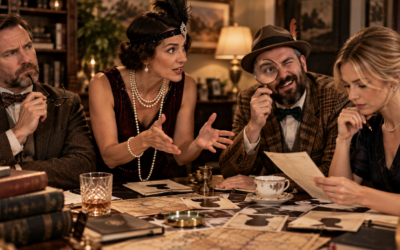
We have watched a lot of murder mystery parties unfold from behind the scenes, and one thing keeps happening that never stops being funny. A guest who spends their entire week color coding spreadsheets shows up, puts on a fake mustache, and suddenly they are barking orders like they run the docks. Their spouse usually looks over at us with an expression that says who is this person and can we keep him. It happens almost every single game we have shipped out, from the Louvre Heist to a quiet little book club dinner in someone’s dining room.
The short answer is that murder mystery games hand people a costume for their personality, not just their body. Once that happens, the rules everyone follows at the office or at church suddenly do not apply, and something in the brain seems to relax about it.
Click Here
Why a Costume Changes More Than People Expect
Psychologists have a name for this. It is sometimes called deindividuation, which is a fancy way of saying that when people feel less identifiable, they act with less restraint. Put on a name tag that says Detective instead of your actual name and something shifts. You are not technically you anymore, at least not for the next two hours, and that tiny bit of distance is enough for a lot of people to try things they would never try at a normal dinner party.
We built our games around this on purpose. Characters come with a name, a motive, a handful of secrets, and just enough backstory to give a guest permission to be someone louder, meaner, or funnier than their daily self. A software engineer who barely talks at team meetings will absolutely accuse their own sister in law of murder if the script gives them the opening. It is not that they are secretly dramatic people hiding in plain sight, although sometimes they are. It is that the format removes the social cost of being dramatic. Nobody is going to bring it up at Thanksgiving because everyone was doing the exact same thing.
If you want a deeper look at why some players go quiet and just watch everyone else spiral, we actually wrote about that exact pattern in our piece on why quiet players make the best detectives. The loud ones are not the only ones transforming. The quiet ones are usually running the whole show internally.
The Office Manager Villain Effect
One theme we hear constantly from hosts is that the calmest, most agreeable person in the friend group becomes an absolute menace the second they get cast as the killer. We have started calling this the office manager villain effect, mostly because it happens to office managers a suspicious amount. Give someone who spends all day smoothing over conflict a character sheet that says lie convincingly to everyone you love, and they treat it like a vacation. There is real relief in getting permission to be the difficult one for once, even in a pretend scenario with a fake weapon and a plate of appetizers going cold on the counter.
It Is Not Just Acting, It Is Relief
Here is the part that surprised us the most after running hundreds of these nights. The transformation is not really about performance at all. Most of our players are not actors, and a lot of them will tell you upfront that they feel awkward pretending to be someone else. The twist is that awkwardness fades fast once the group commits together. Everyone is being weird at the same time, so nobody stands out for being weird. That shared cover is what actually unlocks the personality shift, not any hidden talent for drama class.
This is closely tied to something we dug into in our post about the social psychology behind suspicion, secrets, and accusations. Once one person breaks the normal social contract and lies with a straight face, everyone else gets quiet permission to do the same. It spreads through a room like a yawn, except instead of getting sleepy, your uncle starts accusing your cousin of poisoning the champagne.
Themes Make the Shift Even Bigger
The stronger the world you build, the stronger the transformation tends to be. A generic living room mystery gets some of this effect. A fully dressed set with music, props, and a story that pulls people somewhere else entirely gets a lot more of it. Our Grand Gilded Express tends to produce this in a very specific way. Something about handing a guest a train ticket and a fake diamond necklace makes them commit harder than they would in street clothes standing in a kitchen. The environment tells your brain this is a different reality, and your brain, being a fairly agreeable organ, goes along with it.
Wizard’s Farewell Feast does something similar for bigger groups, since it scales all the way up to 24 characters and somehow every single one of them finds a moment to be a little unhinged. We built these games assuming that people want an excuse, not a script to follow word for word. Give them the excuse and they will write the rest of the performance themselves.
What This Means for You as a Host
If you are planning a night and worried your friends are too reserved to get into character, we would gently push back on that fear. Reserved people are often the ones who transform the most dramatically, precisely because they have the most pent up permission-seeking going on. The accountant does not need acting lessons. He needs a name tag and a motive.
What actually matters more than talent is giving people enough structure to feel safe taking the leap. That is why every character in our games comes with clear objectives instead of a blank slate. A blank slate makes people freeze, because now they have to invent both a personality and a performance from scratch. A defined character with secrets to protect and goals to chase gives them a launchpad. They still get to improvise the delivery, the accent, the ridiculous walk, but they are not starting from nothing.
We also recommend casting a little against type on purpose. Put your quietest friend in the flashiest role and watch what happens. More often than not, that is the person guests talk about for months afterward, not the extrovert who was already expected to be loud.
The Guest Who Cries at Weddings but Cheats at Murder
We have also noticed a pattern that seems to contradict itself until you sit with it for a minute. The most soft hearted people at the table, the ones who tear up during a wedding toast or send condolence casseroles without being asked, are frequently the ones who lie with the most conviction once they are handed a character sheet. It sounds backwards. It is not. Empathy and performance actually share a lot of the same wiring, since both require reading a room and adjusting what you say to fit it. A person who is naturally good at sensing what others need is also, it turns out, naturally good at sensing exactly what a lie needs to sound like in order to land.
That is part of why we tell hosts not to assume the sweetest guest on the list will be the weakest liar. We have seen soft spoken grandmothers deny everything with a straight face while quietly hiding the prop weapon in a tote bag. Nobody suspected her. Nobody ever does.
The Best Compliment We Get
The message we hear most from hosts after game night is some version of I did not know Dave had that in him. That sentence, in all its variations, is basically our entire business model. People do not come back for the props or the plot twists alone. They come back because for one evening a year, their coworker got to be a jewel thief, their mother in law got to be delightfully petty, and everyone left wondering who these people actually are underneath the everyday version they show the rest of the world.
That mystery, the one about your own friends, might be the best one we have ever written, and we did not even have to plan it. We just gave people a reason to show up as someone else for a night.
Click Here
0 Comments