
The Reveal Lands, and Suddenly Everyone Called It
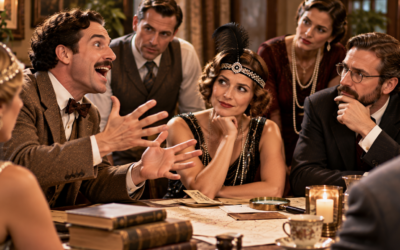
The host reads out the final answer, there is a half second of silence, and then the room erupts with “I knew it!” from at least 5 different people. Your brother-in-law swears he suspected the housekeeper from the very first round. Your neighbor says the whole thing was obvious, even though she spent the evening accusing the gardener with total conviction and wrote his name on her ballot in pen.
Nobody is lying on purpose, which is what makes it so entertaining. Psychologists have a name for this habit of feeling that an outcome was predictable once you know it, and understanding it will change the way you host, play, and argue about mysteries afterward. It also explains why a well-built mystery can feel fair and satisfying even to the guests who got it wrong.
Click Here
What Hindsight Bias Actually Is
Researchers define hindsight bias as the belief that an event is more predictable after it becomes known than it was before it became known. In a 2012 review in Perspectives on Psychological Science, Neal Roese and Kathleen Vohs gave an everyday example involving the 2008 presidential election. A voter who put Obama’s chances at about 60% before the convention might later insist they had always thought it was at least 80%.
The topic has been studied heavily, and the authors counted 818 publications on it when they searched in August 2012. That level of attention makes sense, because the bias shows up everywhere, from medical diagnoses to sports to business decisions. A murder mystery just happens to be one of the safest and funniest places to watch it happen in real time.
Three Ways “I Knew It” Goes Wrong
Roese and Vohs describe 3 levels of the bias, stacked from simple to sophisticated. The first is memory distortion, which is misremembering what you actually thought, as in “I said it would happen.” The second is inevitability, the sense that the outcome had to happen, and the third is foreseeability, the belief that you personally could have predicted it.
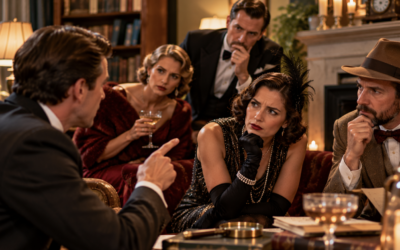
At a game night, all 3 show up before the dessert plates are cleared. A guest remembers suspecting the culprit all along, even though their notes say otherwise. Another declares that the ending was inevitable, and a third insists that anyone paying attention would have seen it coming, which conveniently includes themselves. Each version feels completely true from the inside, and that is precisely why it is so hard to argue with.
Why a Good Story Makes the Bias Stronger
One of the more interesting findings is that the better the story, the greater the hindsight bias. After a reveal, your brain gets handed a clean explanation that ties together the alibis, the motives, and the clues, and it immediately starts connecting the dots in the right order. We also tend to recall the information that fits what we now know to be true, so the clues pointing at the real culprit feel loud and the ones pointing elsewhere quietly fade.
That is a big reason a mystery feels so satisfying at the end. A well constructed case lets the solution click into place and makes the earlier evidence look obvious in retrospect, which is the “oh, of course” moment people love. Our post on the psychology of red herrings explains how false leads work in the opposite direction, pulling attention away from the truth while the game is still running.
When Hindsight Makes the Game Feel Too Easy
There is a downside to all this. After the reveal, guests who struggled often decide the mystery was too easy, because the answer looks so clear now that they know it. A player who spent 90 minutes confused can walk away thinking the clues were obvious and they were simply unlucky, or worse, that the game was poorly designed.
If you have ever heard that complaint, it is worth separating a truly predictable ending from a normal case of hindsight bias. We covered the first situation in our post on what to do when the killer is too obvious, and the second is simply how human brains react to a solved puzzle. The best test is whether anyone actually named the right suspect before the reveal, not whether they feel like they could have.
A Simple Trick: Seal Your Guesses Before the Answer
The easiest way to keep everyone honest is to make people commit before the big moment. Hand out slips of paper near the end of the evening, have each guest write their top suspect and one reason, and collect them in a bowl. When the reveal happens, read them aloud, and enjoy the quiet that falls over the room when the person who swore they knew it all along turns out to have written down someone else.
This also makes for a fun scoreboard, since you can award a small prize to the first correct guess or the best wrong one. A kit with voting pages, like the one in The Louvre Heist, gives you a built-in place to record these guesses, and even if your kit does not, a scrap of paper does the job just fine.
Why Clues Matter More Once Hindsight Kicks In
Hindsight bias is also the reason fair clue placement matters so much. Once the reveal happens, every guest mentally replays the evening and checks whether the answer was supported by what they saw. If the solution traces cleanly back to evidence that was available to the table, the group walks away feeling that the game was fair, even when they missed it. If the answer came out of nowhere, hindsight has nothing to latch onto, and the same guests are far more likely to feel cheated.
This is worth keeping in mind when you choose a kit and when you run the evening. Slow down the clue rounds, make sure every player actually shares what is on their cards, and resist the urge to rush toward the vote. The more of the evidence the whole table has seen, the more satisfying the “oh, that was there the whole time” moment becomes, and the less likely anyone is to complain that the ending was either impossible or painfully obvious.
Consider the Opposite Before the Reveal
Roese and Vohs point to a remedy that has worked consistently in the research, which they call consider-the-opposite. The idea is to encourage people to think through alternative explanations for an outcome, and it reduced hindsight bias in the studies they reviewed, though it did not eliminate it completely. They also note it works best when limited to 2 or 3 alternative explanations, because trying to generate many can backfire.
You can use this at the table right before the final vote. Ask each guest to argue for a suspect they do not believe is guilty, giving a motive and a plausible way the person could have done it. It is a fun exercise, it tends to produce some hilarious theories, and it makes the eventual reveal more satisfying because people have actually weighed other possibilities instead of locking onto the first thing that sounded right.
The Reveal Is the Part Everyone Remembers
Hindsight bias is not only a quirk to manage, it is also part of why mystery nights stay with people. The moment when everything snaps into place, followed by a roomful of friends loudly claiming credit, is the story that gets retold at the next family gathering. We dig into why these evenings stick in memory in our post on why people remember mystery nights, and the reveal is a large part of the answer.
So the next time someone says “I knew it” after the final answer, you can smile, nod, and quietly ask to see their ballot. They are not being dishonest, they are being human, and the evening is more entertaining because of it.
Click Here

0 Comments