
The Standard Engagement Party Formula Is Getting a Little Tired
You know the drill. Someone rents a nice room or clears out the living room, a few appetizer trays show up from Costco or a caterer if the budget allows, somebody’s dad gives a toast that runs eight minutes longer than it needed to, and everyone stands around with a glass of prosecco making small talk about the wedding date. It’s fine. It’s also basically identical to the last four engagement parties everyone at that party already attended this year. Nothing wrong with tradition, but if you’re the one planning this thing, “fine” probably isn’t the bar you were hoping to clear.
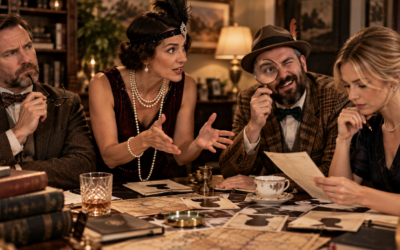
A murder mystery flips the entire format on its head, and not in a gimmicky way. Instead of forty minutes of standing around before people start looking at their phones, guests get an actual activity that forces conversation, laughter, and the kind of memorable chaos that gets brought up at the wedding a year later. The engaged couple gets to watch their friends and family lie to each other’s faces for two hours, which, frankly, is more entertaining than any playlist you could put together.
Click Here
Why Toasts and Appetizers Alone Undersell the Moment
An engagement is a genuinely big deal. Two people decided to build a life together, and the party celebrating that fact deserves more than a cheese board and a Spotify playlist labeled “engagement vibes.” The problem with the standard format isn’t that it’s bad exactly. It’s that it’s passive. Guests show up, they watch the couple get toasted, they eat some crackers, they leave. Nobody’s really participating in anything. Compare that to a night where every single guest has a character, a secret, and a job to do, and suddenly the party has stakes. People remember nights where they had something to do, not nights where they stood near a charcuterie table for two hours nodding along to speeches.
If you’re weighing this against other party formats entirely, our comparison of a murder mystery versus a cocktail party breaks down exactly where the standard mixer format falls short for events that are supposed to feel like a milestone.
It Works Even If Half the Guest List Is Strangers
This is the part that surprises most hosts. Engagement parties often mix two entirely separate social circles: her college roommates, his coworkers, both sets of parents who’ve maybe met twice. That’s normally a recipe for a stiff, cliquey room where people cluster with who they already know. A murder mystery erases those lines almost immediately. Characters get assigned regardless of friend group, so his accountant coworker ends up interrogating her childhood best friend about a stolen necklace, and within twenty minutes they’re allies plotting against a third suspect. Nobody has time to be shy about knowing three people in the room when they’ve got a motive to protect.
We wrote a full guide on running a murder mystery party for a room full of strangers that’s worth a look if your guest list skews heavily toward “people who’ve never met.”
Matching the Theme to the Couple, Not Just the Season
Skip the generic murder mystery box that has nothing to do with the actual couple getting engaged. The best engagement party mysteries lean into something personal: maybe they met on a trip to Paris, maybe one of them has a slightly unhealthy obsession with heist movies, maybe they just want an excuse to get everyone dressed up in something glamorous for one night before the wedding budget forces everyone into the same three bridesmaid colors for a year.
For couples who want that old-money, dress-to-impress energy, we’ve had a lot of hosts go with the Louvre Heist. It’s set in a gallery full of stolen art and scheming socialites, which happens to photograph beautifully if anyone’s planning to post pictures from the party later. Six to eight players keeps it manageable for a smaller engagement gathering too, so you’re not trying to wrangle twenty people through a single storyline.
Solving the “Who Gives the Toast” Awkwardness
One quiet benefit nobody mentions: a murder mystery restructures the whole evening so the toast doesn’t carry all the emotional weight by itself. Instead of one nervous best friend standing up cold in front of fifty people, you run the game first, let the room warm up through two hours of laughing and accusing each other of murder, and then transition into toasts once everyone’s relaxed and a little buzzed off good champagne. The speech lands better when it comes after the room has already bonded over something, rather than being the single make-or-break moment of the whole party.
This also solves the problem of guests who dread public speaking. By the time toasts roll around, everyone’s already been performing a character for two hours, so standing up to say a few genuine words about the couple feels a lot less exposed.
Food That Doesn’t Fight the Format
A seated four-course dinner sounds elegant, but it locks everyone into their chairs for way too long and kills the energy a mystery needs to build momentum. Go with something more grazing-friendly instead. A charcuterie spread, a signature cocktail named after the engaged couple, maybe a dessert table people can hit between rounds. This keeps guests moving, refilling plates, and staying loose instead of getting stuck in a formal dinner rhythm that fights against the pacing of the mystery itself. Save the sit-down dinner for the rehearsal dinner. This party wants a different kind of energy.
Sizing It to Your Actual Guest List
Engagement parties range wildly in size, from a dozen close friends crammed into an apartment to eighty people rented out at a venue because both families are enormous. The mystery you pick needs to match. For a tighter, more intimate gathering, something like the Desert Palace keeps the story focused and personal, which works well when you want every guest to feel like a real player instead of background noise. If your guest list balloons past what a single storyline can hold, look into whether the kit scales up, since some of our larger mysteries are built specifically to handle bigger crowds without losing the plot.
What to Tell Guests Beforehand
Nobody enjoys arriving at a party only to be handed a character packet with zero warning. A short heads up in the invitation does most of the work: mention that this is a murder mystery engagement party, that costumes are optional but encouraged, and that everyone will get a character assignment closer to the date. Giving people a few days to mentally prepare, and maybe pull together a quick costume piece, makes a noticeable difference in how much they commit once the game actually starts. Cold-starting someone into a full character with zero context tends to produce a lot of confused shrugging in the first ten minutes, and that’s ten minutes you’d rather spend on the actual mystery.
If you want a template for exactly how to phrase that heads up without giving away spoilers, our post on how to tell guests about a murder mystery party covers wording that builds excitement instead of confusion.
Click Here
An engagement only happens once, at least ideally. The party celebrating it doesn’t have to look like every other engagement party your friends have already sat through this year with the same appetizers and the same background music. Give people something to actually do, something they’ll bring up unprompted at the wedding a year later when someone asks how everyone met. A good murder mystery does more for a milestone celebration than another round of clinking glasses ever will, and it turns out watching your future in-laws accuse each other of theft is a surprisingly great way to kick off a marriage.


0 Comments